
Introduction
Let’s say that this blog inspired you to build an RC car with your kids. Welcome to the joy of sharing a hobby with your family. I built a car with each kid who wanted to do the project.
You want to do the project, you have the car in the cart, but you don’t know about the additional items needed to complete the car. The first part of this equation that can be overwhelming is the servo. You can buy servos for 10 dollars and spend as much as several hundred dollars. That is a pretty big spread. So, how do you know how to pick the right one?
Why do you need a servo?
In an electric car, the servo is used to steer the vehicle. If you buy a nitro- or gas-powered RC car, then you need a servo to operate the throttle and brakes, in addition to steering.
When most people start this hobby, they go with an electric car because it is a lot easier to enjoy quickly. Nitro is fun, but you have to adjust the carburetor, which is an extra step to get the car going.
You want to buy the right servo to make sure that you can control the car’s direction. Before you buy anything, make sure the servo physically fits your vehicle. Standard-size servos are common in larger vehicles. Some smaller-scale cars will want a mini or micro servo. You can buy a low-profile servo for some touring cars. Check the kit manual for the required servo dimensions. If the kit doesn’t say anything about a specific servo, then a standard-sized servo should do the trick.
Digital vs Analog
There are two basic kinds of servos. There are digital servos and analog servos. Analog servos can work perfectly well, especially in inexpensive or less demanding applications. Digital servos generally give you better holding power, quicker response, and more precise control. The actual speed and torque depend on the particular servo.
The digital servo is controlled by a microprocessor. This servo will be quicker, will hold its position with more precision, and is more responsive. You can also buy a servo tuning card and then program the digital servo. However, that is starting to get into the weeds. The beauty of the digital servo is that it might cost you a few more dollars than an analog, but the extra 10 dollars is worth it.
The other difference between these servos is that the digital is going to have a smaller deadband. Deadband is the amount of input change the servo can ignore before it responds. A smaller deadband means the servo can react to smaller changes in the transmitter signal. So, the less deadband , the servo responds with more precision when you turn left or right on the radio/transmitter. That was a funny slip. I remember when these things were on the AM frequency, and you had to bring different crystals to avoid interfering with another person. Back in those days, we could only drive our cars uphill both ways. I digress…
The best way to describe this is to think back to driving an older car or old farm truck. On an older car, there is a lot of play in the steering. A more modern car with rack-and-pinion steering is pretty precise.
So, think of the analog as being the old vehicle. The digital is the newer vehicle with much less steering slop. The digital servo is going to be more responsive all around.
My pick is to go digital. Yes, you can save a bit on the analog, but the digital servo I put in my Dark Impact is right around 40 dollars. It is going to steer faster than an analog servo and be close to the same price as a good analog servo.
Which gears do you get in the servo?
The other thing to watch in the servos is the type of gears they have. You have plastic-geared servos, and then you have metal-geared servos. I encourage people to stay away from the plastic-geared servos. They are cheap, okay for bashing, but their lifespan is not very long. This is bad, not in the sense of cool, but in the sense that it is going to really suck.
The metal-geared servos will have steel, titanium, or aluminum. I go with steel gears for off-road vehicles. Steel is going to be more durable if the car takes repeated hits. An off-road vehicle is going to jump and slide around a ton, so you want the servo to be strong so it can take a beating.
The titanium and aluminum gears will be stronger than plastic and reduce the servo’s weight. If you are racing a touring car in the stock Tamiya class, then you want weight savings. Titanium is durable and light. It not as durable as steel gears, but still durable. I use this for on-road vehicles where I want every weight and speed advantage I can get. A touring car is not going to take the same beating as an off-road vehicle. So, you want a light and fast servo in this application.
Briefly, you want metal gears because they are going to last way longer than the plastic-geared servos. As you can see, the application will determine your servo choice.
Core vs Coreless
This is where the water can get a little muddy.
Cored motor: traditional brushed motor with a conventional iron core/armature.
Coreless motor: still a brushed motor, but the armature is constructed without the traditional iron core. This makes the rotating assembly lighter and allows it to accelerate/decelerate quickly.
Brushless motor: uses electronic commutation rather than brushes. Generally more efficient, incredibly durable, and expensive. In fact, I bet it could outlive cockroaches. If you have the means, this is the way to go. However, now you are over 100 dollars. You really may not need to spend that much to get your desired performance.
Generally, the more money you spend, the better the servo is going to be. The question I hope you are asking is, “Do I really need to spend that much to get the performance I need?” My buggy has a cored digital servo. It is going to be absolutely fine for my application. So, you really don’t have to buy the most expensive servo to enjoy a competitive car.
Using the transmitter to set limits
I mentioned that you can program the limits on the digital servo with a program card. This is true, but if you have a more advanced radio system, then you can set the limits on the servo as well. Personally, I would throw more money at a radio system than a top-of-the-line servo.
If you buy a radio system that has multi-model memory, then you should be able to program how far the servo will move. If you are researching radio systems, just make sure that the system can set limits. The reason you want this is so you don’t destroy the RC car, as I did with my buggy. I built the buggy years ago and did not know about limiting the servo. So, the plastic that holds the front got a stress fracture. Unfortunately, this will not self-heal in an airboat.
I like the Spektrum systems. The company is American-owned by Horizon Hobby. They are a decent bang for the buck. If you are buying your first radio system, then the three you want to research are Spektrum, Futaba, and FlySky. I think if I were going to do it over again, I would go with the Futaba T3PV. Futaba is a great system. They used to be very expensive. Now they are just expensive. :-D
I have played with FlySky systems as well. The upper-end models work well, but I would avoid their cheaper radios. I played with a higher-end radio system, and it was amazing. I played with their cheaper system, and the radio would lose contact with the car on the far side of the track. So, if you really want a cheaper system that works, then buy a mid-grade FlySky like FS-GT5. It is a really great bang for the buck at 70 dollars. If you really want to waste, err… I mean, invest some time, you can research all three systems.
When you set the limits on your servo, the only thing that should be moving is the wheels. If you see the car rocking back and forth, make sure that the servo horn is not hitting something. You may also need to adjust your steering a little bit. You do this by turning the ends a few turns to shorten the steering arm. If that is all set, then you just dial back the servo so nothing is hitting.
The takeaway: a radio system that has multi-model settings will have custom settings. This means you can set the servo travel right from the radio.
Torque and Speed
Two numbers you will see when shopping for a servo are speed and torque. Speed tells you how quickly the servo can move. Torque tells you how much force the servo can apply. A touring car doesn't need huge amounts of torque, but you want speed for quick steering. A crawler doesn't need particularly fast steering, but it needs a lot of torque to push the tires around rocks. So don't automatically buy the servo with the biggest numbers. Buy the servo that fits your particular kit.
This is another thing where the more money you spend, the better the servo is going to be. The issue is: do you really need to spend that much money to get the application you desire?
How do you center the servo?
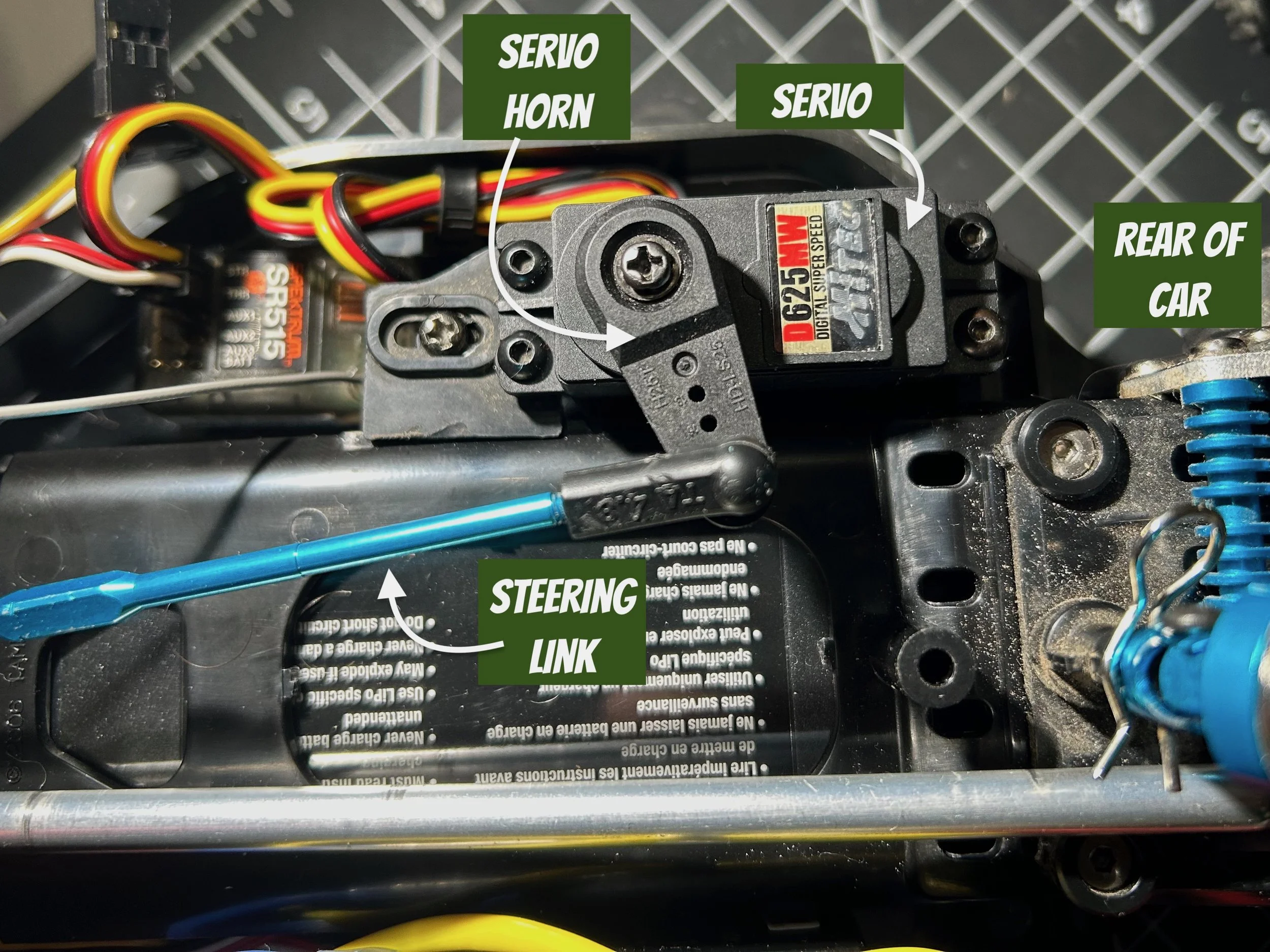
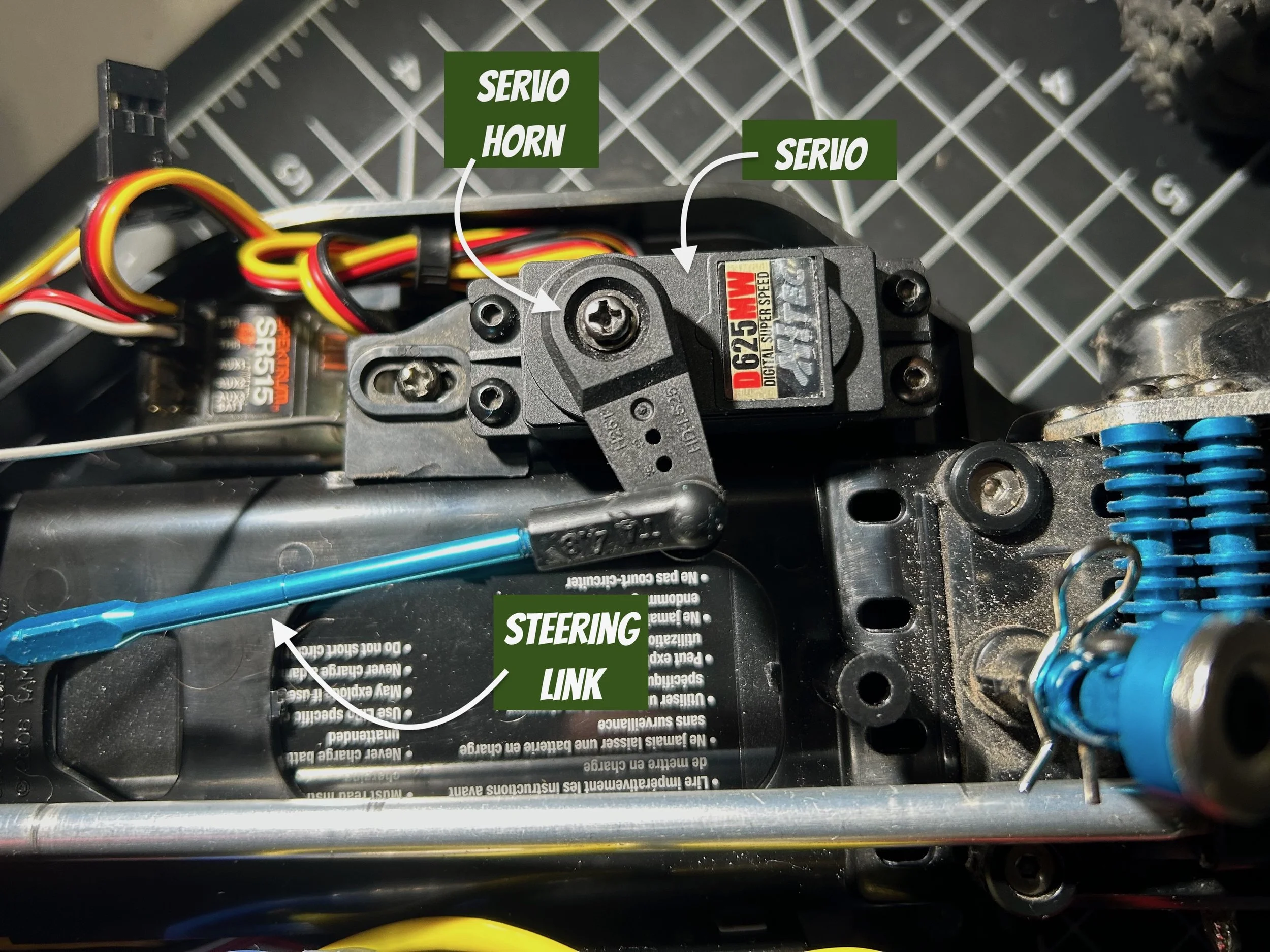
First, mount the servo, but don’t put the horn on the servo. The horn is the part that attaches to the top of the servo and controls the steering on an electric car.
Second, now that you have your servo mounted and connected to the receiver, turn the radio system on.
Third, turn on the car, and you should hear it interact with the radio. Turn the wheel side to side a couple of times, and then let it sit in the middle. Now your servo is centered. This is the midpoint of the servo.
Fourth, now you can attach the horn. Now, you are ready to do the fine adjustments to the servo.
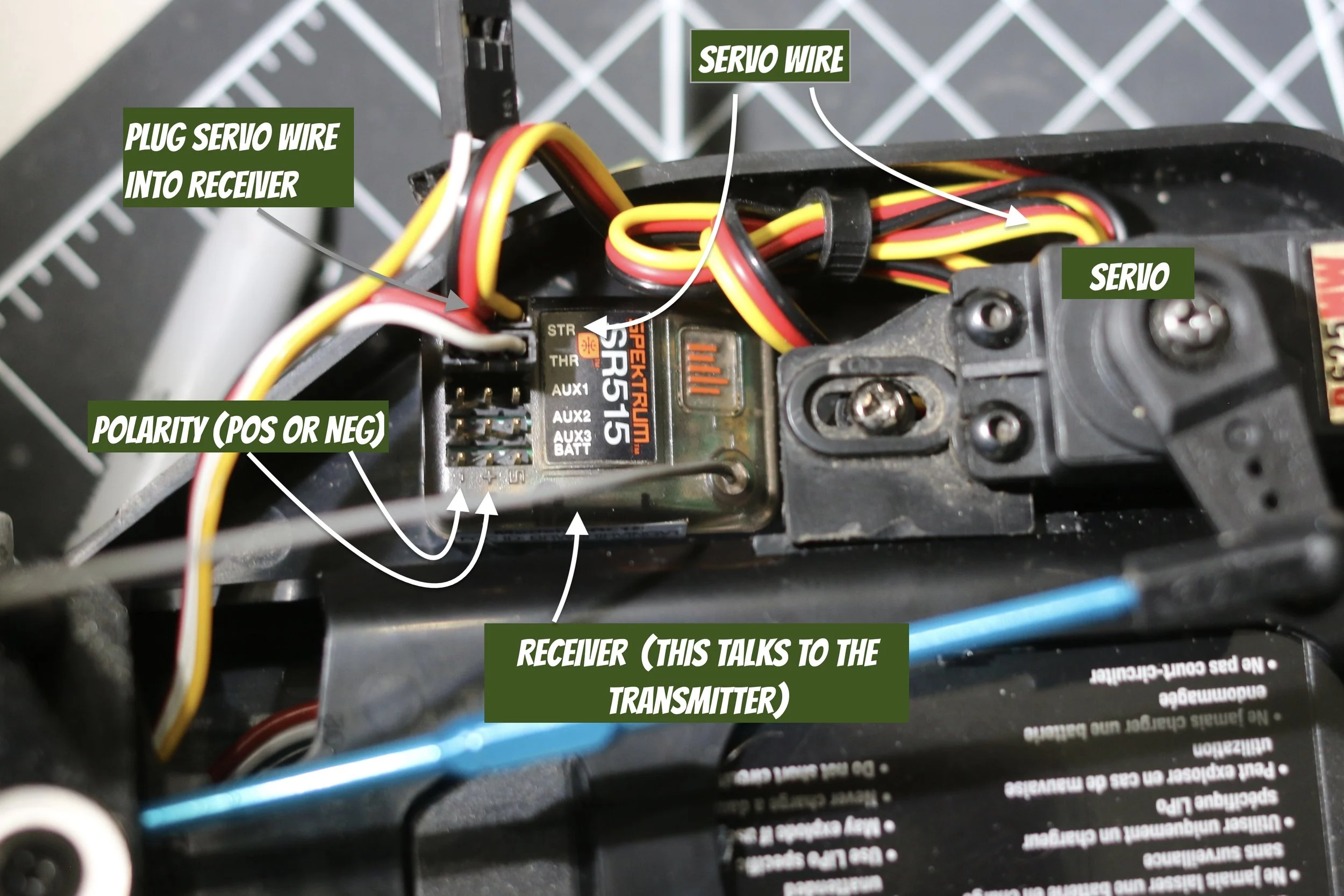
The nice thing about an upgraded radio system is you can set the limits for the digital and the analog servo. I tend to have a variety of servos lying around, as I have worn-out servos. So, I will slap in an old one while I figure out the potential upgrade or even rebuild the servo.
Hitec: The Ultimate Cheat for Servo Selection:
If I don’t feel like doing extensive research, then I cut corners. I go to Hitec’s website and start selecting what I want in a servo. This is a link to their surface servos. I select where I want to put this servo on the left side of the page. Then you scroll down, select your budget, and then you select the scale of the car. I go down to the control circuit and select digital. Then you will have a selection of servos to choose from.
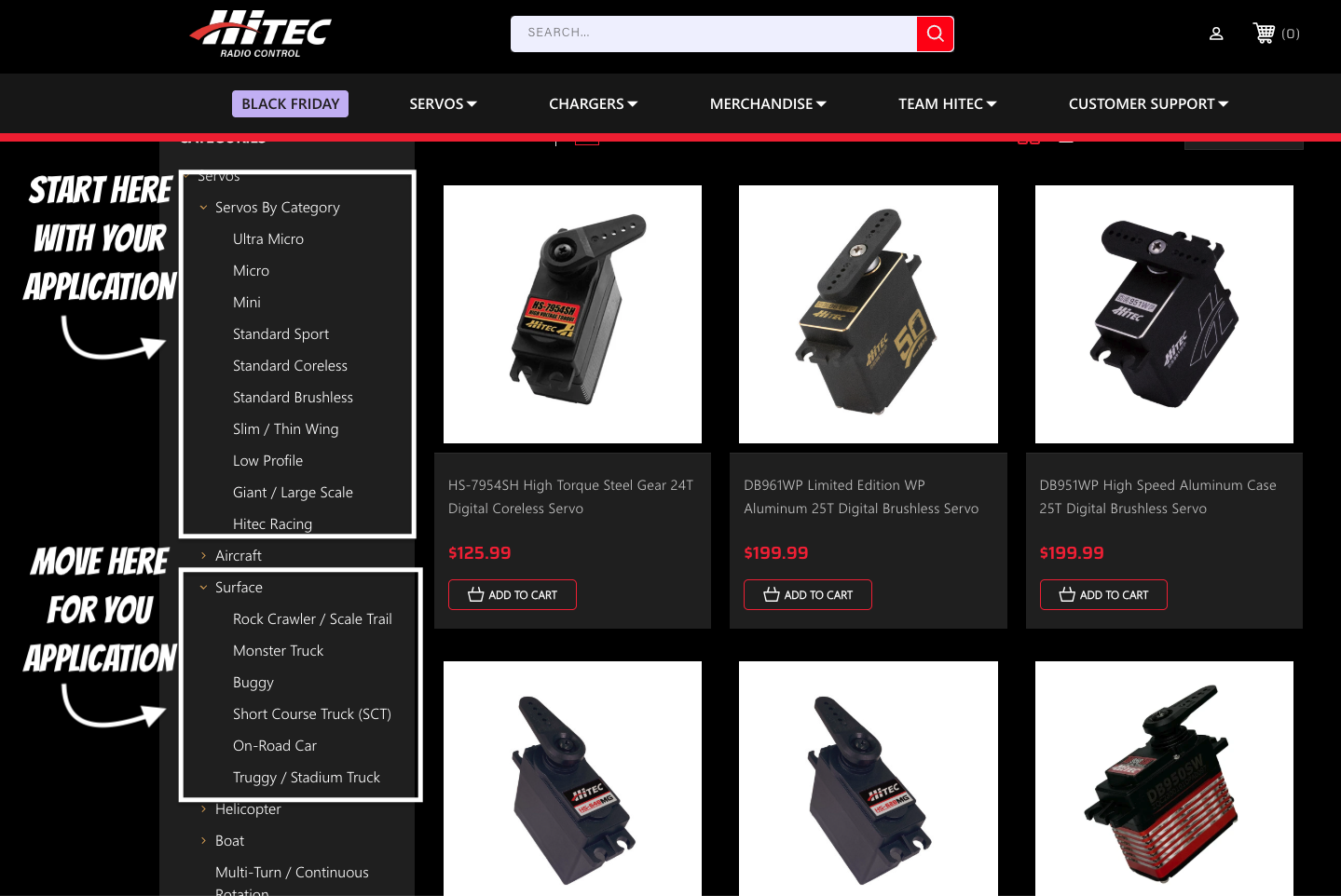
If you are not sure that you want this particular Hitec servo, then pay attention to the specs. Figure out what specs you like and then find another servo on Amain, Tower Hobbies, Horizon Hobbies, and maybe Amazon. Amazon is going to have a lot of knock-off Chinese servos that might work, but the customer service at the above stores has been top-notch for me.
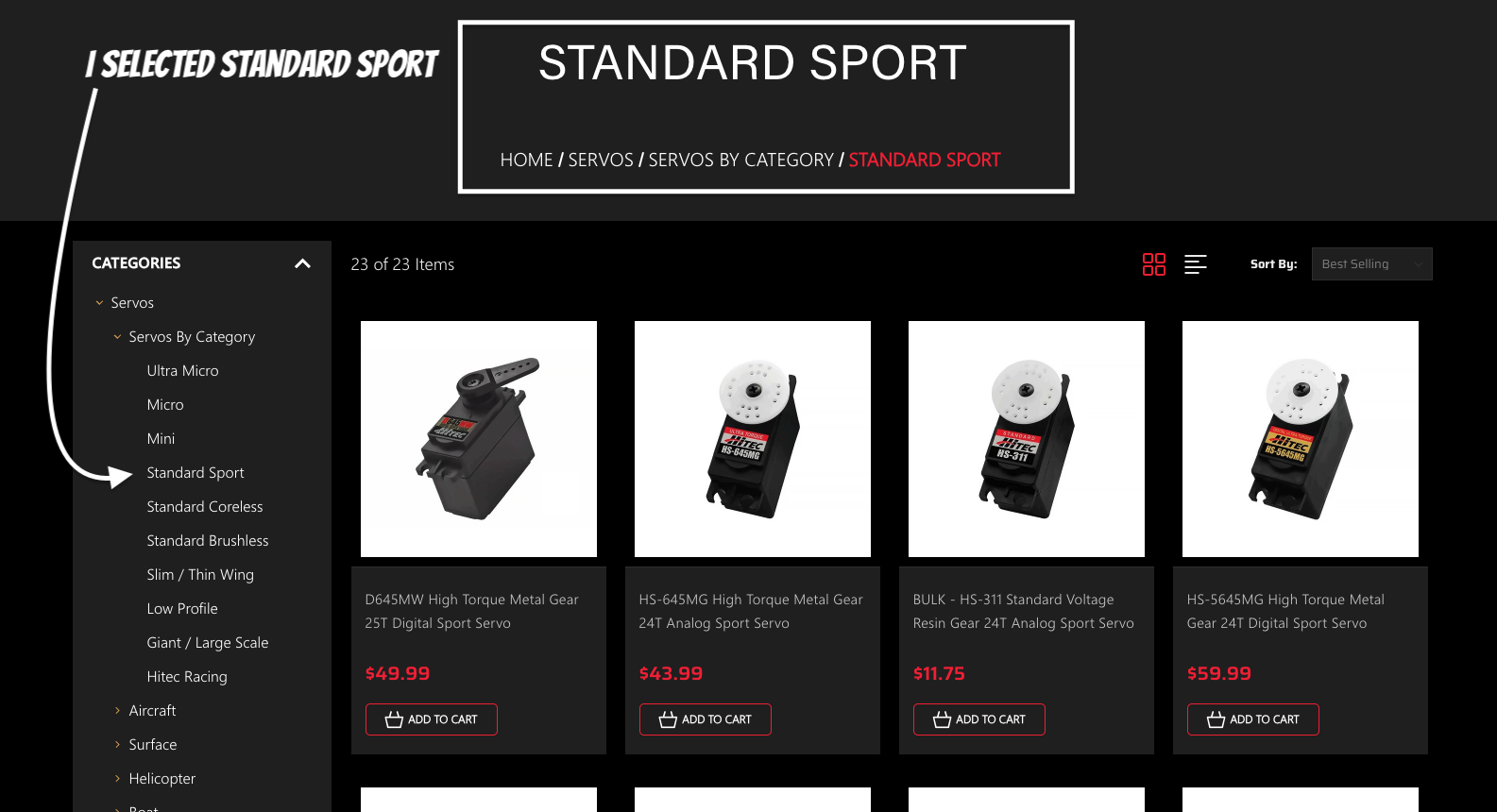
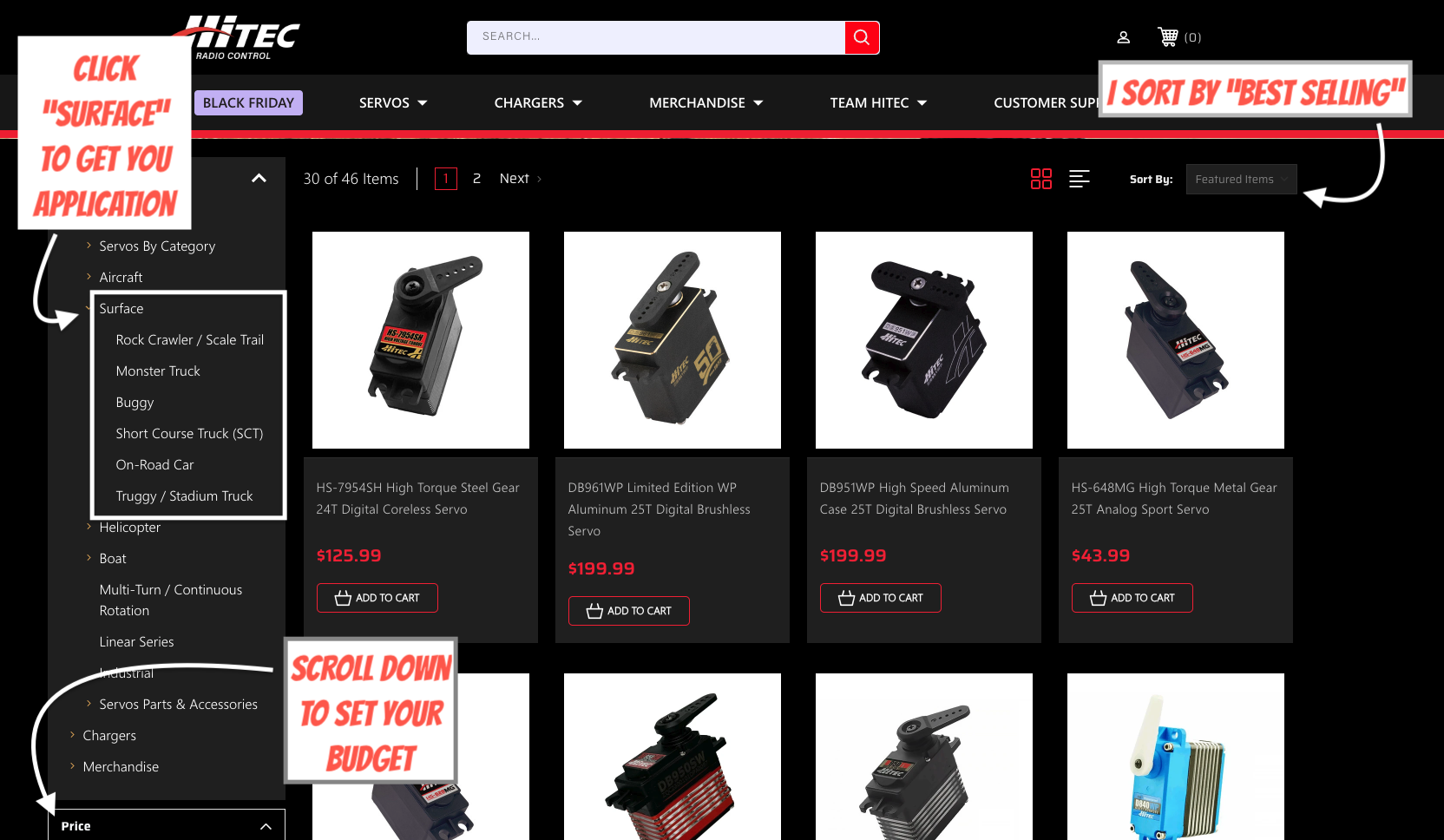
If you follow the screenshots above, then you will be well on your way. Click a servo in your budget range, and HiTec will show you its stats. This will definitely give you the starting point for the speed, torque, and whether you really need to spend a ton of money for optimal performance.
Conclusion: What do we learn about servos?
We learn that buying a servo is a little more complicated than saying, “Just take your budget and double it.” The key is to know the vehicle and the goals for the vehicle.
You can spend hundreds of dollars on a servo, but you don’t have to spend that much. I hope this article makes it clear that you might get the right servo for 30-40 dollars. There are a few things to ask yourself:
What do I want this servo for? (A touring car is not heavy, so you don’t need high torque, but you want speed so the wheels respond quickly. If you are doing a crawler, then speed might not be a priority, but torque (the servo’s power) is going to be a priority. You want that servo to push the wheels over rocks, potentially.
Hitec has a great servo selector on their webpage that will give you an idea of the specs you want to look for in your servo. If you take your time, you can click through what you want. Hitec will give you recommendations, and then you can find those specs in another brand if you don’t like Hitec. Personally, Hitec has consistently performed well for my applications.
How much can I spend? This is where you are going to limit the options and set your priorities. I like the Hitec link because you will have different options of servos at different price points. I always start with the cheap skate option and then work my way up. If you play around, you might find a cheaper servo that is still great, and then you can spend more money on the motor or even a radio system.
Now go order your kit, and have some fun building it. Is there something else about servos that I forgot to mention?
Don’t miss more ideas to get out with the family.
Subscribe to Paulie’s Picks and get new adventures and reviews delivered to your RSS reader.
Subscribe via RSS →Enjoying Paulie’s Picks? Buy me a coffee.