
Pinewood Derby Car
Introduction
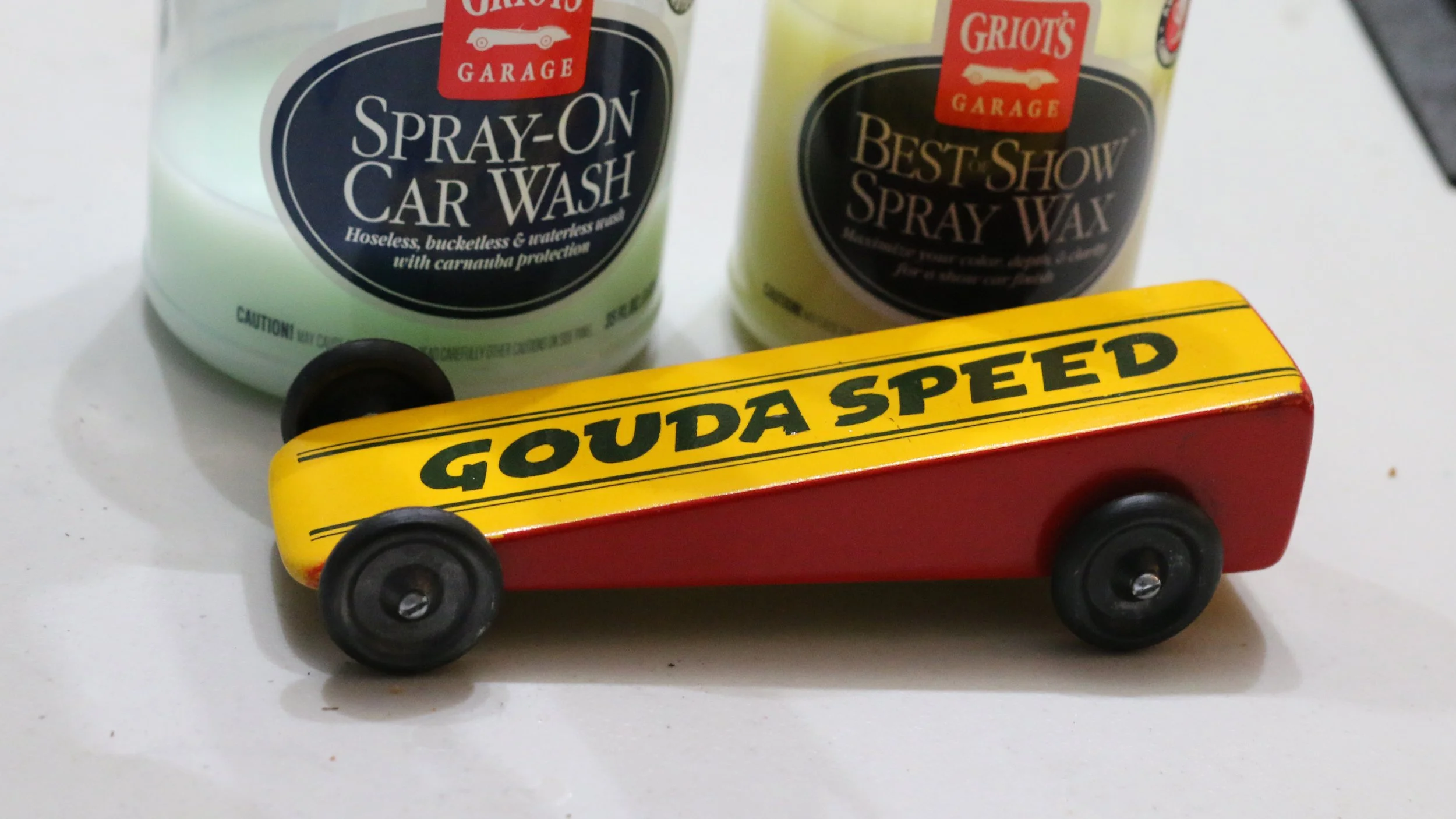
People were chanting, “Gouda… Gouda…Gouda.” He won the speed race by a long shot. It was not even close, and no one even contested the victory. In fact, we called his car Gouda Speed, and it lived up to its name. The closest car was maybe 5 seconds behind his.
There is something that is fun about building a vehicle that moves under its own momentum. No motor at all, but just using the strategy of gravity. This is the beauty of the pinewood derby car.
What is the race?
A lot of people do not know this, but there are two races you can win in the Pinewood Derby. The first one is the speed race, but the second one is the turtle race. The turtle race’s goal is to build the slowest car that can roll down the track, but still cross the finish line. You might think that this is easy, but it requires strategy. The car has to be slow enough that it comes in last place, but fast enough that it crosses the line. If the car does not cross the line, then it is disqualified. This race did not interest my son.
My son then opted for the speed race. The key to this race is making sure that you know “how to interpret the rules.” This is where we use the rally car strategy for the derby cars. You know the tricks where people made restrictor plates open at full throttle to get more power. This was Toyota’s cheat. The thought is that if they don’t catch it, then they didn’t do it. Toyota was so slick with this trick that the rumor is someone on their team turned them in.
My son knew of another trick that Ford used where they hid air tanks in the bumper to give a car more boost when needed. This is one is beautiful because there were no rules forbidding this. So, technically, their car was still legal, unlike Toyota.
Then there is Lancia. Sure, there is the rule of 200 cars. Do you really need 200 cars? I mean, what if you just register 200 cars, and the inspector thinks you produced 200 cars? The rules really are not that clear, to be honest. So, Lancia decided that registering 200 cars was sufficient.
So, my son had to study the rules so we could find the loopholes. We wanted to opt for Ford with the hidden boost tank in the bumper. It is important to note that what is not forbidden is permitted. You just need to think about physics and what the rules allow.
The Rules
The car has to be an official Derby kit car.
The car needs the wheels and the axles that come with the kit.
Three wheels must touch the ground
The wheels must stay in the stock shape. You cannot add bushings or bearings.
The car needs to be about 3/8 of an inch off the ground.
5 ounces is the maximum weight. (The car can have a lead weight added to it)
The axles can be polished, but not heavily modified.
Only dry lube can be added to the wheels.
So, we understand these parameters. It is time to get to work.
The Build
My son did the research. We studied the rules, and I helped him with some tools. We did the troubleshooting together. We want to stay legal and make sure that we interpret everything correctly.
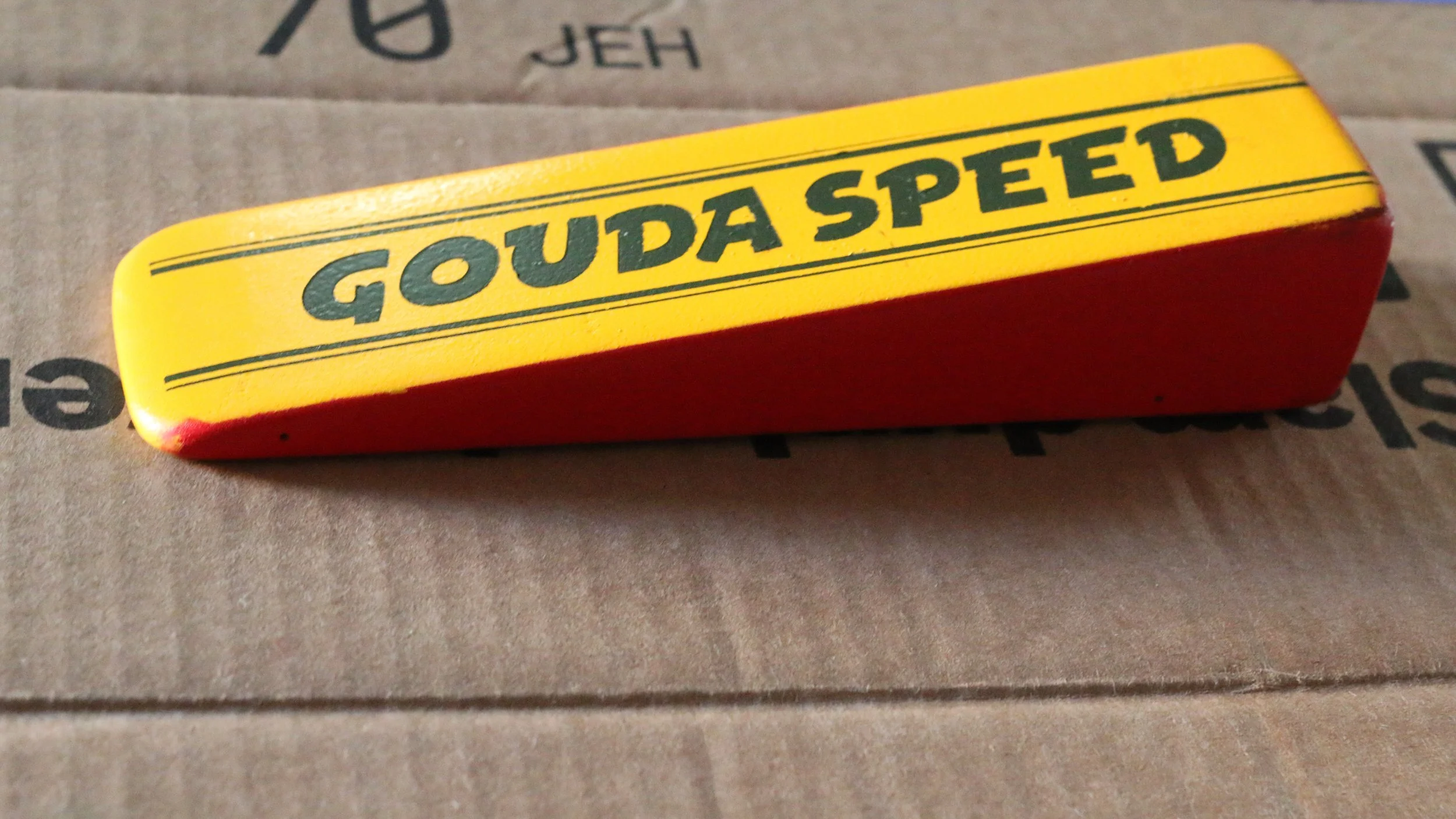
He cut the car into a wedge shape. At this point, you do not worry about the appearance, but a clean cut is great. The cleaner the cut, the smoother the car. You have no motor, so you have to take advantage of everything. So, a smooth car means a smoother cut through the air. We are still using the block that came in the box. The length is the same, and the back meets the height requirement. No rules as to much of the car is to meet the height requirement.
You want to have a nice centered cut in the car so you can add the lead. You want the weight to be central, so think mid-engine weight.
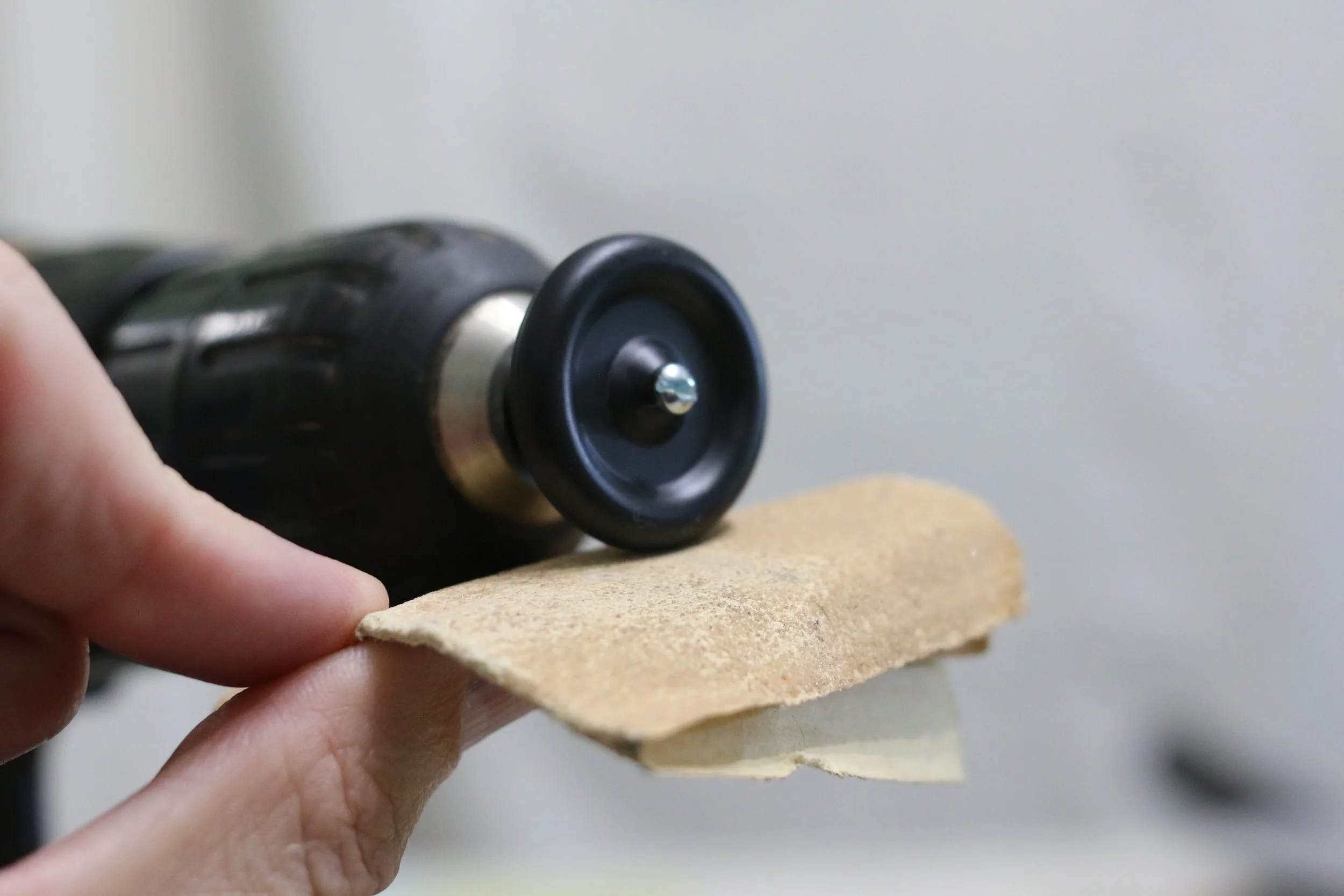
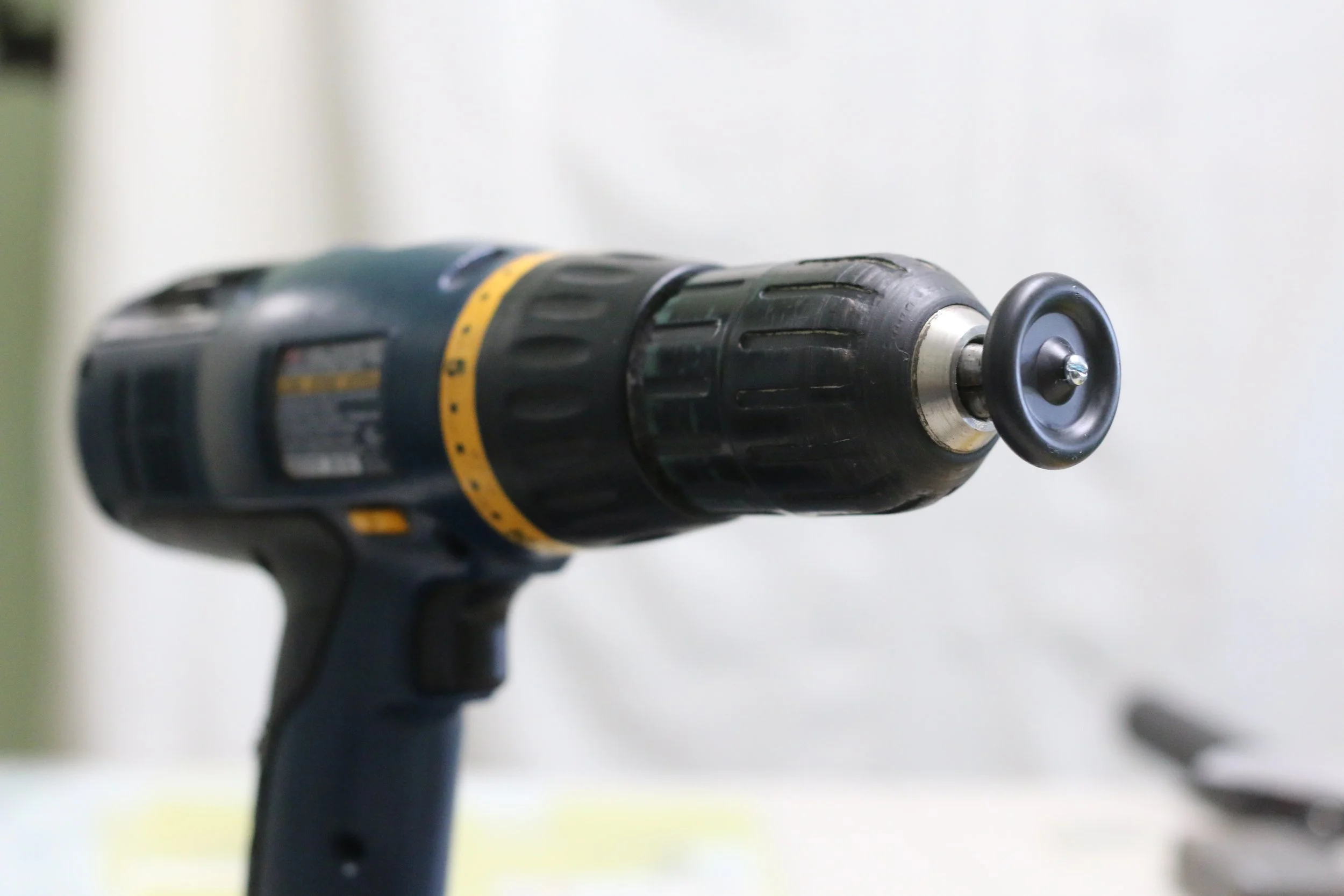
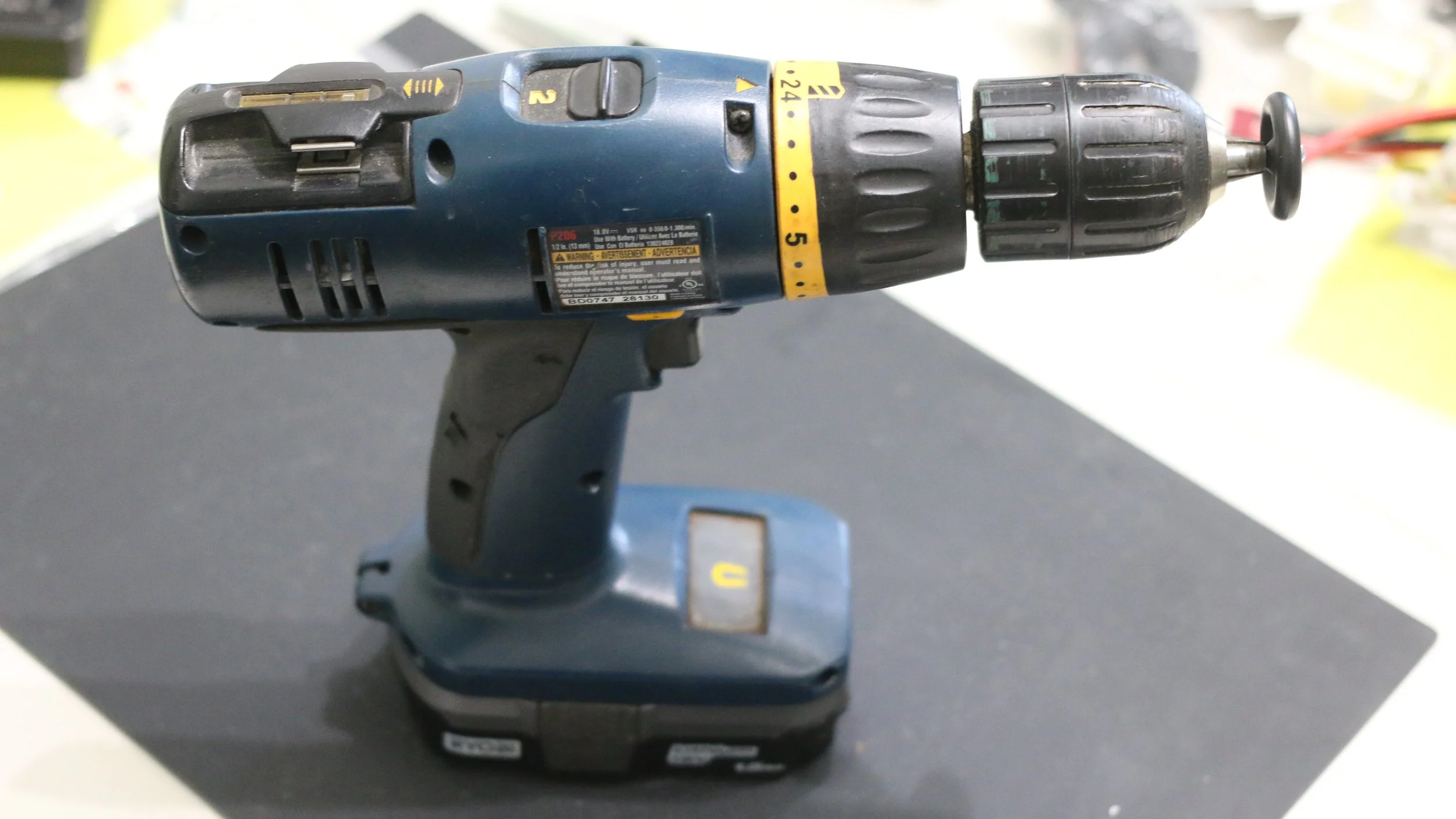
The wheels need love, too. The wheels can be lightly sanded. Well, we did that. The car had to have four wheels, but only three had to touch. So, we put one wheel in a drill and ran the wheel over some sandpaper to trim down its diameter. You cannot tell it, but one wheel did not touch the ground. The wheel was lightly sanded with about 60-grit sandpaper.
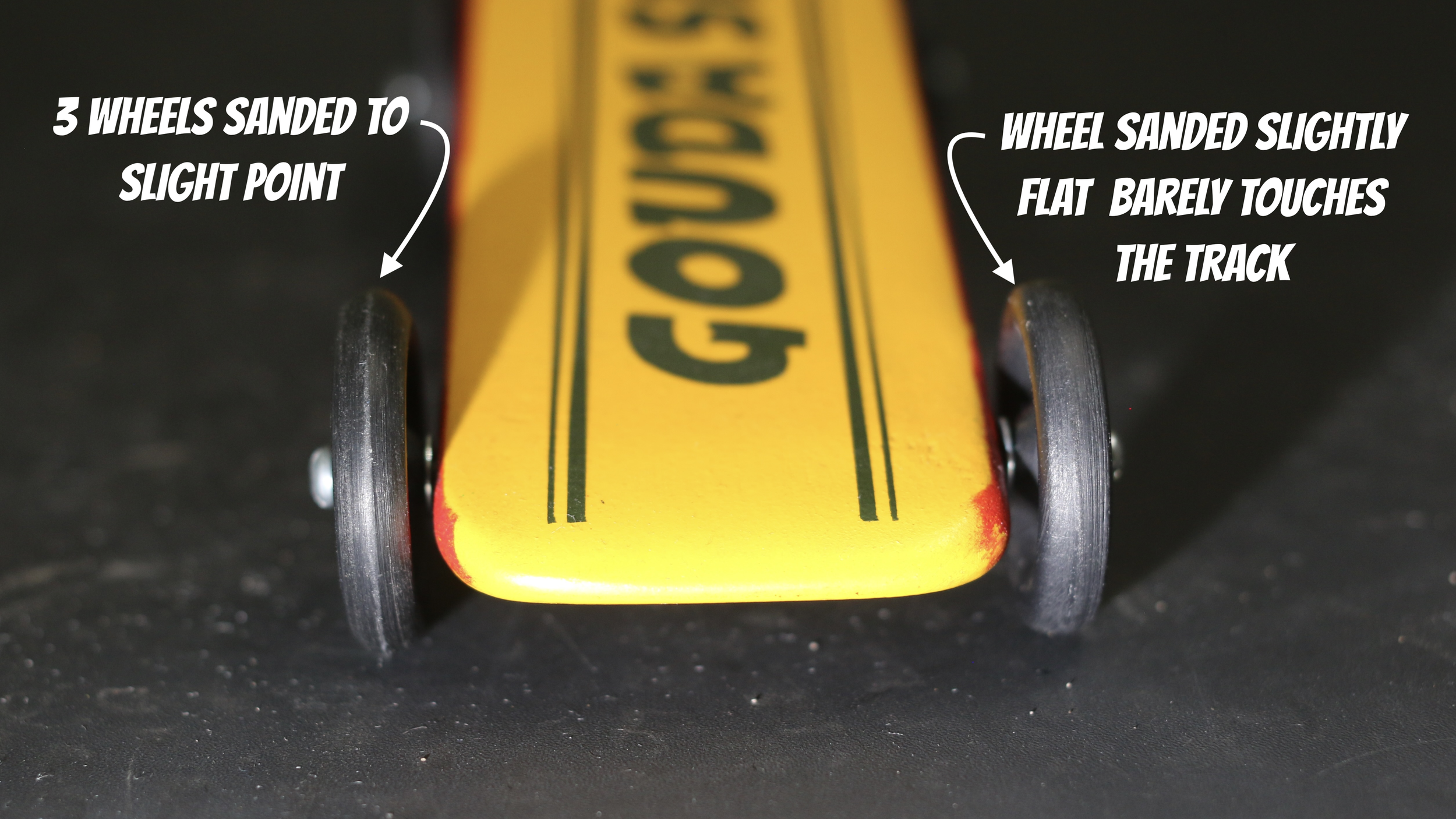
You also want to take the other wheels and grind them to a subtle point at the bottom. The trick is that the wheels cannot be visibly altered, but you can make the wheel come to a little bit more of a point. So, we are still within the boundaries of the rules, and just making sure we have the wheels set to reduce drag.
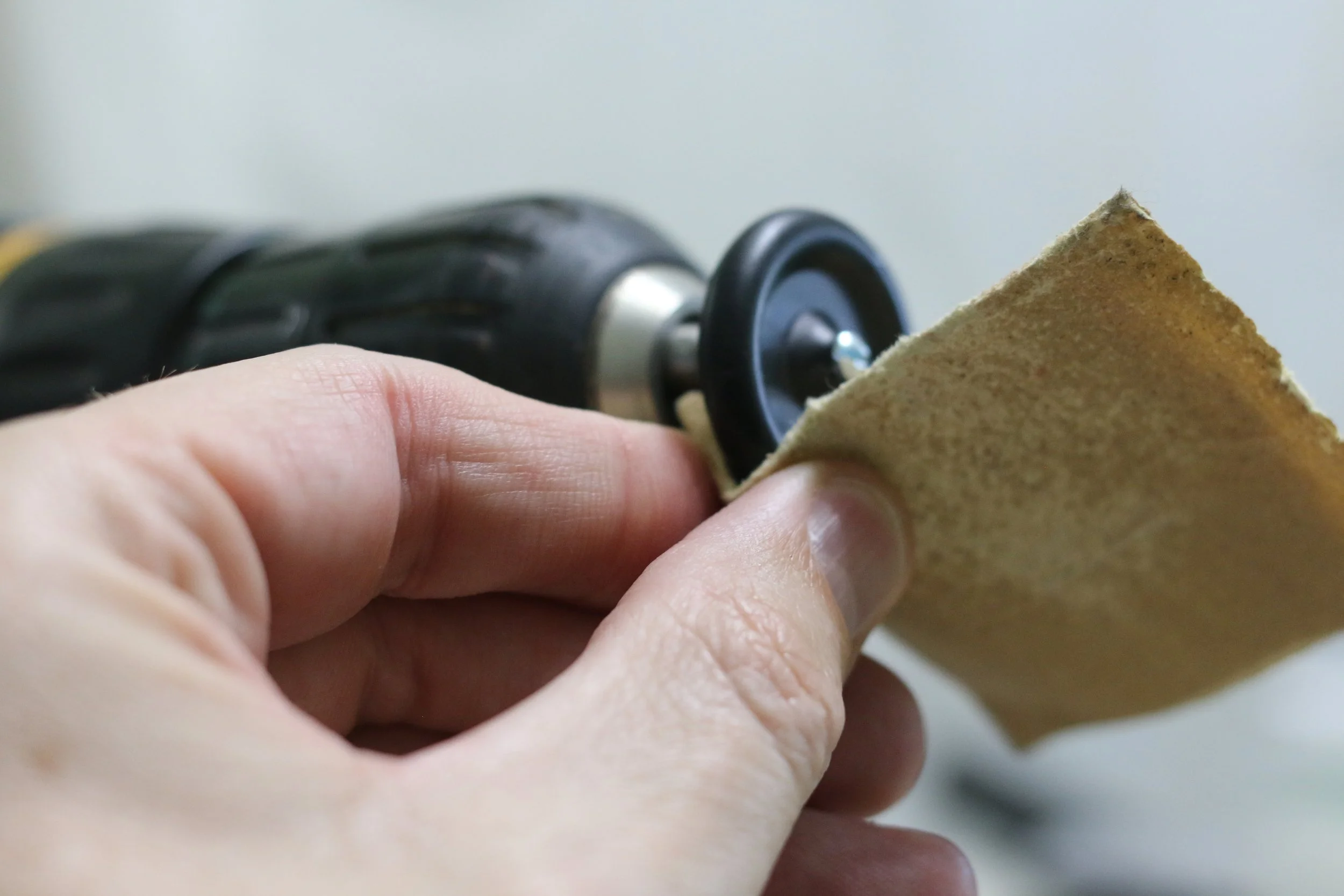
(We put the included axle in the drill. If you push the wheel against the drill it will spin when you power on the drill. Hold the sandpaper in a v shape, and the wheel will grind to a point.)
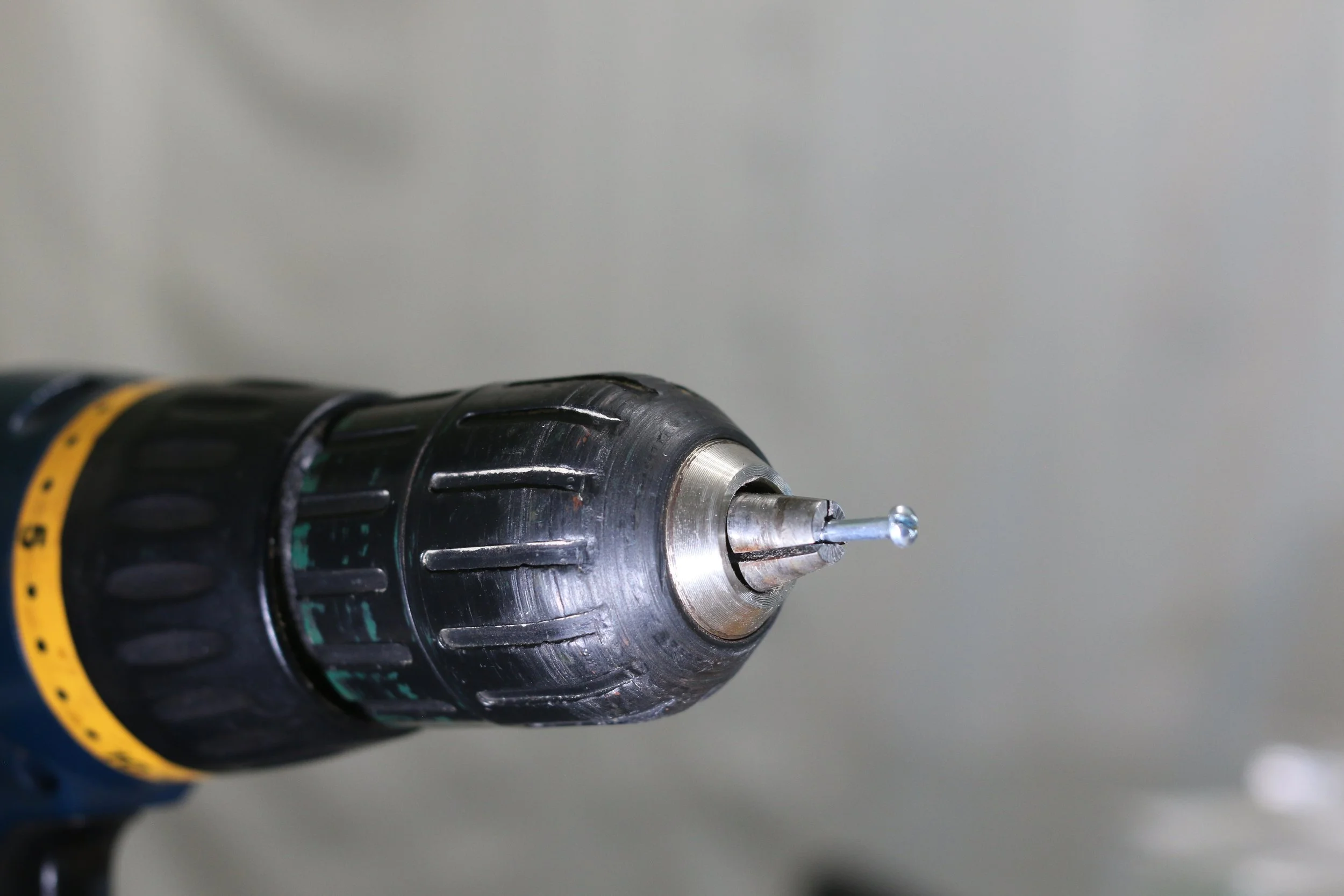
(This is how we got the axle smooth. You can use sandpaper or steel wool. You do not want to do this too long or the wheel will wobble in the axle. You want to just make sure that axle is 100% smooth.)
When you tend to the axles, you want to use a wire brush. You want them to be polished and not tight in the wheel, but not so loose that they wobble. You want to make sure that everything moves very freely. Basically, you are polishing off any imperfections on the axle. We looked at the rules, and this is completely permitted.
Next, you paint the car, apply a clear coat, and some wax. I used Griot's Garage quick detail wax. It goes on easily, and you can get a surface that’s really slippery. The stuff works, but I know that Meguires makes a product that is similar and cheaper.
When you put the wheels on the car, you use graphite lube. When I say graphite lube, I mean a LOT of graphite lube. Your polished axles should have removed any burrs or imperfections. The graphite lube makes sure that they spin. The rule is only dry lube. We met that requirement.
The outcome
So back to the chant “Gouda…. Gouda…” His car cleaned up in the race, and he was invited to race in the open non-rule class. One car was made of solid lead. The car was 5 pounds. His car almost beat the solid lead car. That was shocking! So, with a little love, every detail matters.
The challenge of finding the engineering advantages without breaking the rules is pretty fun. It takes some thought and planning, but the work pays off.
Conclusion
The beauty of the derby cars is that it’s not just a project. It combines integrity with engineering advantages. If you want a fun project, then I suggest you pick up a pinewood derby car. Trying to get something to go fast under its own power is a fun challenge. It is a great project to do together.